Key Details
About the role
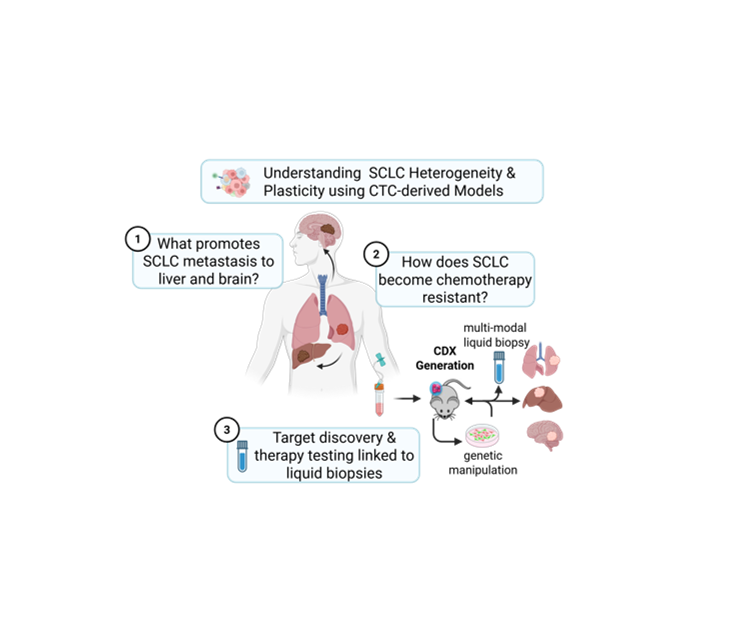
We seek a motivated and ambitious individual to work alongside us to deliver an internationally recognised CRUK core funded programme in Small Cell Lung Cancer (SCLC) discovery research. This career defining opportunity offers research independence, national and international visibility and leadership responsibility. The Associate Scientist will play a pivotal role in shaping and delivering our strategic vision to improve the treatment of this aggressive lung cancer.
Working closely with Group leads Prof Caroline Dive and Dr Kathryn Simpson, the post holder will contribute to our research strategy. You will supervise staff and students to deliver ongoing SCLC biology projects and develop your own ideas to attract new funding and initiate and lead new projects. You will author publication outputs and represent the Group at National and International Conferences. You will also become a member of the CRUK Lung Cancer Centre of Excellence.
About you
You will have a PhD in cancer biology, molecular and/or cell biology, molecular pharmacology or a related discipline and relevant experience in a cancer research laboratory. Our ideal candidate will have a strong track record in basic discovery cancer research, (ideally in lung and/or neuroendocrine cancers) with proven cell and molecular biology and/or pharmacology skills including experience working with a range of in vivo preclinical models. Extensive post-doctoral experience gained in academia and/or the biotechnology/Pharma sectors, together with extensive experience in studying tumour biology, including function testing studies (e.g. CRISPR, degrons, screening), are essential for the role. You will be a proactive problem solver who relishes a challenge. With experience in supervising early career researchers and in manuscript and grant writing, you will be pivotal to the success of research projects within the SCLC Biology Group and the maintenance of our international reputation in the field of SCLC research. You will enjoy teamwork and gain satisfaction from both personal and team success.
More information
How to apply
To apply for this position please complete the online application via ‘Apply Now’. Please ensure you detail the names of three referees and ensure you submit your application before the closing date specified.
For any informal enquiries about this post, please contact: Prof Caroline Dive: caroline.dive@cruk.manchester.ac.uk or Dr Kathryn Simpson: kathryn.simpson@cruk.manchester.ac.uk
Closing date: 18:00 hours on 14th June 2026.
First stage Interview: 29th June 2026.
Contact us for further information

Benefits
Find out how contributions to the Institute are recognised with a generous benefits package

Wellbeing
Our mission is to promote and enhance wellbeing through the development of a proactive and enabling culture.

Equality, Diversity and Inclusion
Read about our commitment to creating an environment where diversity is celebrated and everyone is treated fairly

Personal Development
To enable you to excel in your role and continue to develop, we offer a variety of training and support opportunities

Our Research
Our research spans the whole spectrum of cancer research from cell biology through to translational and clinical studies

Research Groups
Our research groups study many fundamental questions of cancer biology and treatment

Our Facilities
The Institute has outstanding core facilities that offer cutting edge instruments and tailored services from expert staff

Latest News & Updates
Find out all our latest news
Why choose Cancer Research UK Manchester Institute?
The Cancer Research UK Manchester Institute, an Institute of The University of Manchester, is a world-leading centre for excellence in cancer research. The Institute is core funded by Cancer Research UK (www.cancerresearchuk.org),
the largest independent cancer research organisation in the world.
We are partnered with The Christie NHS Foundation Trust, one of the largest cancer treatment centres in Europe, which is located adjacent to the CRUK MI Manchester Institute in South Manchester. These factors combine to provide an exceptional environment in which to pursue basic, translational and clinical research programmes.

Careers that have a lasting impact on cancer research and patient care
We are always on the lookout for talented and motivated people to join us. Whether your background is in biological or chemical sciences, mathematics or finance, computer science or logistics, use the links below to see roles across the Institute in our core facilities, operations teams, research groups, and studentships within our exceptional graduate programme.