Paper information and key findings
Chromatin organization underlies gene regulation and cell fate specification, yet how nucleosome-scale chromatin structure contributes to lineage segregation during early development remains unknown. Here, we resolved chromatin ultrastructure during the first lineage decision in mouse and human, which forms the pluripotent inner cell mass (ICM) and trophectoderm (TE). To achieve this, we developed dual-tilt chromatin electron tomography (2T-ChromEMT) that allows multiscale visualization of chromatin architecture. Our analysis reveals that TE cells of both species display denser chromatin with nucleosome aggregation at the nuclear periphery. We show upregulation of the nuclear matrix protein Lamin A/C within the TE lineage across mouse, human, and opossum embryos, indicating that its regulatory role is conserved across eutherian and marsupial species. Loss of Lamin A/C reduces heterochromatin at the nuclear lamina in TE cells, reactivates pluripotency genes, and impairs mouse blastocyst expansion and human blastoid formation. These findings define the nucleosome-resolution chromatin signatures of early mammalian lineages and establish Lamin A/C–mediated chromatin organization as a conserved mechanism in the exit from pluripotency and maintenance of trophectoderm identity.
The first lineage decision in mammalian development establishes the inner cell mass (ICM) and trophectoderm (TE). These two unique cell lineages display restricted developmental potentials—the ICM exhibits pluripotency and forms the future fetus, and the TE generates the cells that will develop into the placenta1–3. Spatially defined epigenetic and transcriptional programs underlie these cell identities. They are initiated de novo after fertilization and are reinforced by mechanically regulated Hippo signaling4–7, where the nuclear matrix protein Lamin A/C has been implicated in the coupling of mechanical forces to ICM and TE fate8. Pluripotency is established with expression of Nanog, Sox2, and Pou5f1 (Oct4) in ICM precursor cells situated towards the embryo’s interior. In outer cells that form the TE, Cdx2 and Gata3 repress the pluripotency factors1,3,9–12. However, whether Lamin A/C directly regulates chromatin structure to drive these gene expression profiles remains unknown.
While epigenetic marks associated with these cell states have been described13, how chromatin conformation promotes and stabilizes ICM and TE identities remains unclear. This raises the fundamental question of whether distinct chromatin structural properties define the first lineages in mammalian development. Species-specific differences in chromatin organization between mouse and human pluripotent stem cells14–18 highlight the diversity of chromatin states underlying pluripotency. In addition, Hippo-independent lineage specification in marsupials19 points to alternative regulatory mechanisms driving and maintaining early cell fate decisions. Together, these findings underscore the need for comparative analyses to understand how chromatin architecture drives lineage specification. Such questions have been difficult to address due to limited access to human embryos at different developmental stages. However, recent advances in stem cell-based human blastoids, which mimic blastocyst-stage organization, provide a tractable model to investigate these regulatory events in vitro20–22. Another challenge lies in the technical limitations of existing approaches for analyzing chromatin structure, which spans orders of magnitude. No current imaging or genomics method captures all scales with high fidelity from a single sample.
Although subnucleosome-scale visualization of chromatin structure has been enabled by chromatin electron tomography (ChromEMT)23, new acquisition and quantitative analysis approaches are needed to connect nucleosome organization with higher-order chromatin structure for multiscale studies in mammalian embryo models.
Here, we adapted ChromEMT23 to uncover how chromatin is remodeled during the earliest lineage segregation in mouse and human. We identified cell type-specific chromatin signatures that are conserved across species, as well as defining characteristics of human embryonic chromatin. We linked specific features of TE chromatin to the conserved upregulation of Lamin A/C, which we show is essential for blastocyst formation in mouse and human models. Our findings define Lamin A/C as a conserved driver of the first cell fate decision across mouse, human, and opossum embryos.
Chromatin organization underlies gene regulation and cell fate specification, yet how nucleosome-scale chromatin structure contributes to lineage segregation during early development remains unknown. Here, we resolved chromatin ultrastructure during the first lineage decision in mouse and human, which forms the pluripotent inner cell mass (ICM) and trophectoderm (TE). To achieve this, we developed dual-tilt chromatin electron tomography (2T-ChromEMT) that allows multiscale visualization of chromatin architecture. Our analysis reveals that TE cells of both species display denser chromatin with nucleosome aggregation at the nuclear periphery. We show upregulation of the nuclear matrix protein Lamin A/C within the TE lineage across mouse, human, and opossum embryos, indicating that its regulatory role is conserved across eutherian and marsupial species. Loss of Lamin A/C reduces heterochromatin at the nuclear lamina in TE cells, reactivates pluripotency genes, and impairs mouse blastocyst expansion and human blastoid formation. These findings define the nucleosome-resolution chromatin signatures of early mammalian lineages and establish Lamin A/C–mediated chromatin organization as a conserved mechanism in the exit from pluripotency and maintenance of trophectoderm identity.
The first lineage decision in mammalian development establishes the inner cell mass (ICM) and trophectoderm (TE). These two unique cell lineages display restricted developmental potentials—the ICM exhibits pluripotency and forms the future fetus, and the TE generates the cells that will develop into the placenta1–3. Spatially defined epigenetic and transcriptional programs underlie these cell identities. They are initiated de novo after fertilization and are reinforced by mechanically regulated Hippo signaling4–7, where the nuclear matrix protein Lamin A/C has been implicated in the coupling of mechanical forces to ICM and TE fate8. Pluripotency is established with expression of Nanog, Sox2, and Pou5f1 (Oct4) in ICM precursor cells situated towards the embryo’s interior. In outer cells that form the TE, Cdx2 and Gata3 repress the pluripotency factors1,3,9–12. However, whether Lamin A/C directly regulates chromatin structure to drive these gene expression profiles remains unknown.
While epigenetic marks associated with these cell states have been described13, how chromatin conformation promotes and stabilizes ICM and TE identities remains unclear. This raises the fundamental question of whether distinct chromatin structural properties define the first lineages in mammalian development. Species-specific differences in chromatin organization between mouse and human pluripotent stem cells14–18 highlight the diversity of chromatin states underlying pluripotency. In addition, Hippo-independent lineage specification in marsupials19 points to alternative regulatory mechanisms driving and maintaining early cell fate decisions. Together, these findings underscore the need for comparative analyses to understand how chromatin architecture drives lineage specification. Such questions have been difficult to address due to limited access to human embryos at different developmental stages. However, recent advances in stem cell-based human blastoids, which mimic blastocyst-stage organization, provide a tractable model to investigate these regulatory events in vitro20–22. Another challenge lies in the technical limitations of existing approaches for analyzing chromatin structure, which spans orders of magnitude. No current imaging or genomics method captures all scales with high fidelity from a single sample.
Although subnucleosome-scale visualization of chromatin structure has been enabled by chromatin electron tomography (ChromEMT)23, new acquisition and quantitative analysis approaches are needed to connect nucleosome organization with higher-order chromatin structure for multiscale studies in mammalian embryo models.
Here, we adapted ChromEMT23 to uncover how chromatin is remodeled during the earliest lineage segregation in mouse and human. We identified cell type-specific chromatin signatures that are conserved across species, as well as defining characteristics of human embryonic chromatin. We linked specific features of TE chromatin to the conserved upregulation of Lamin A/C, which we show is essential for blastocyst formation in mouse and human models. Our findings define Lamin A/C as a conserved driver of the first cell fate decision across mouse, human, and opossum embryos.
https://royalsocietypublishing.org/rsob/article/16/8/260089/482862/CDK1-Cyclin-B-mediated-phosphorylation-of-PP2A-B56
CDK1-Cyclin B mediated phosphorylation of PP2A-B56 on B56Par1.T73T75 controls mitotic entry timing and Schizosaccharomyces pombe cell size
19 August 2026
Institute Authors (3)
Lenka Halova, Duncan Smith, Iain Hagan
Labs & Facilities
Biological Mass Spectrometry
Research Group
Cell Division
19 August 2026
https://www.cell.com/immunity/fulltext/S1074-7613(26)00278-5
CCR7+ activated dendritic cells are essential for spontaneous and immunotherapy-driven anti-tumor immunity
4 August 2026
Institute Authors (10)
Erin Richardson, Shih-Chieh Chiang, Massimo Russo, Charles Earnshaw, Anna Pidoux, Poppy Dunn, Sudhakar Sahoo, Antonia Banyard, Natalia Moncaut, Santiago Zelenay
Labs & Facilities
BRU Experimental Team, Computational Biology Support, Genome Editing and Mouse Models, Mass and Flow Cytometry, Transgenic Breeding Team
Research Group
Cancer Inflammation and Immunity
4 August 2026
https://www.cell.com/cell/fulltext/S0092-8674(26)00522-2
Plasma signals of lung tumor promotion for molecular cancer prevention
25 June 2026
Institute Authors (1)
William Hill
Research Group
Cancer Origins
25 June 2026
https://link.springer.com/article/10.1038/s44319-026-00809-1
PKMYT1 has an important role in the timing and fidelity of chromosome segregation
5 June 2026
Institute Authors (6)
Asma Belbelazi, Charlie Greenaway-Wells, Zoe Edwards, Wendy Trotter, Keren Dawson, Iain Hagan
Research Group
Cell Division
5 June 2026
https://www.nature.com/articles/s42255-026-01514-y
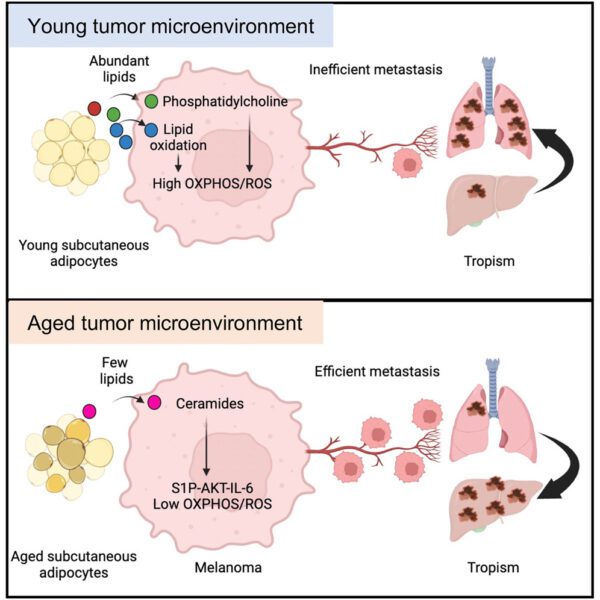
Tissue-specific fibroblast lipid cues impose the rate of epithelial cancer invasion
27 April 2026
Institute Authors (4)
Amaya Virós, Noah Palombo, Charlotte Russell, Claus Jørgensen
Research Group
Skin Cancer & Ageing
27 April 2026
https://www.cell.com/cancer-cell/fulltext/S1535-6108(26)00114-5
Immunometabolic gatekeeping: How tissue metabolism conditions tumor immunity
13 April 2026
Institute Authors (1)
Samra Turajlić
Research Group
Cancer Dynamics
13 April 2026