Paper information and key findings
Predicting lung cancer risk would enhance prevention trials. Although the Canakinumab Anti-inflammatory Thrombosis Outcome Study (CANTOS) trial demonstrated reduced lung cancer incidence with interleukin (IL)-1β inhibition, the high number needed to treat (NNT) to prevent lung cancer limits its use in unselected populations. Using machine learning, we identified a 14-protein plasma signature predicting lung cancer more than 5 years before diagnosis. The signature, validated across eight cohorts, was elevated in current smokers and individuals exposed to particulate matter (PM) and linked to lung myeloid and alveolar cells. In epidermal growth factor receptor (EGFR)-driven lung adenocarcinoma, diverse epithelial lineages converged on a keratin8+/claudin4+ alveolar transitional state (KAC), whose transcriptional programs correlated with signature emergence. Components of the signature were induced by PM, oncogenic EGFR, or IL-1β, whereas IL-1β inhibition restrained PM-driven KAC expansion and early tumorigenesis. In CANTOS, the signature identified individuals who seemed to benefit more from anti-IL-1β therapy, lowering the NNT threshold and nominating circulating signals of tumor promotion for prevention.
Predicting lung cancer risk would enhance prevention trials. Although the Canakinumab Anti-inflammatory Thrombosis Outcome Study (CANTOS) trial demonstrated reduced lung cancer incidence with interleukin (IL)-1β inhibition, the high number needed to treat (NNT) to prevent lung cancer limits its use in unselected populations. Using machine learning, we identified a 14-protein plasma signature predicting lung cancer more than 5 years before diagnosis. The signature, validated across eight cohorts, was elevated in current smokers and individuals exposed to particulate matter (PM) and linked to lung myeloid and alveolar cells. In epidermal growth factor receptor (EGFR)-driven lung adenocarcinoma, diverse epithelial lineages converged on a keratin8+/claudin4+ alveolar transitional state (KAC), whose transcriptional programs correlated with signature emergence. Components of the signature were induced by PM, oncogenic EGFR, or IL-1β, whereas IL-1β inhibition restrained PM-driven KAC expansion and early tumorigenesis. In CANTOS, the signature identified individuals who seemed to benefit more from anti-IL-1β therapy, lowering the NNT threshold and nominating circulating signals of tumor promotion for prevention.
Hear about why air pollution matters for cancer from our Cancer Origins Group Leader, Will Hill
https://royalsocietypublishing.org/rsob/article/16/8/260089/482862/CDK1-Cyclin-B-mediated-phosphorylation-of-PP2A-B56
CDK1-Cyclin B mediated phosphorylation of PP2A-B56 on B56Par1.T73T75 controls mitotic entry timing and Schizosaccharomyces pombe cell size
19 August 2026
Institute Authors (3)
Lenka Halova, Duncan Smith, Iain Hagan
Labs & Facilities
Biological Mass Spectrometry
Research Group
Cell Division
19 August 2026
https://www.cell.com/immunity/fulltext/S1074-7613(26)00278-5
CCR7+ activated dendritic cells are essential for spontaneous and immunotherapy-driven anti-tumor immunity
4 August 2026
Institute Authors (10)
Erin Richardson, Shih-Chieh Chiang, Massimo Russo, Charles Earnshaw, Anna Pidoux, Poppy Dunn, Sudhakar Sahoo, Antonia Banyard, Natalia Moncaut, Santiago Zelenay
Labs & Facilities
BRU Experimental Team, Computational Biology Support, Genome Editing and Mouse Models, Mass and Flow Cytometry, Transgenic Breeding Team
Research Group
Cancer Inflammation and Immunity
4 August 2026
https://www.cell.com/cell/fulltext/S0092-8674(26)00522-2
Plasma signals of lung tumor promotion for molecular cancer prevention
25 June 2026
Institute Authors (1)
William Hill
Research Group
Cancer Origins
25 June 2026
https://link.springer.com/article/10.1038/s44319-026-00809-1
PKMYT1 has an important role in the timing and fidelity of chromosome segregation
5 June 2026
Institute Authors (6)
Asma Belbelazi, Charlie Greenaway-Wells, Zoe Edwards, Wendy Trotter, Keren Dawson, Iain Hagan
Research Group
Cell Division
5 June 2026
https://www.nature.com/articles/s42255-026-01514-y
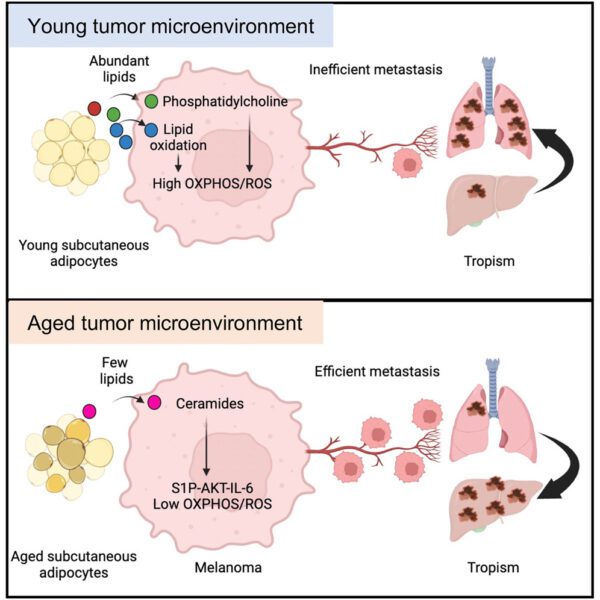
Tissue-specific fibroblast lipid cues impose the rate of epithelial cancer invasion
27 April 2026
Institute Authors (4)
Amaya Virós, Noah Palombo, Charlotte Russell, Claus Jørgensen
Research Group
Skin Cancer & Ageing
27 April 2026
https://www.cell.com/cancer-cell/fulltext/S1535-6108(26)00114-5
Immunometabolic gatekeeping: How tissue metabolism conditions tumor immunity
13 April 2026
Institute Authors (1)
Samra Turajlić
Research Group
Cancer Dynamics
13 April 2026