Article highlights & insights
Mitotic entry is a tightly regulated process controlled by CDK1-Cyclin B1. Its activity is negatively regulated by the WEE family kinases, WEE1, WEE2 and PKMYT1, to prevent premature mitotic entry. While WEE1 has an established role in regulating CDK2 during S-phase, the full scope of PKMYT1’s roles in the cell cycle is surprisingly unexplored. Here, we show that PKMYT1 activity increases during anaphase and we reveal a novel mitotic function for PKMYT1 that is distinct from its family member WEE1. Chemical inhibition of PKMYT1 induces premature anaphase, leading to chromosome segregation errors. These errors, including chromatin bridges and micronuclei, consequently activate the cGAS–STING pathway. We further demonstrate that PKMYT1 contributes to maintaining spindle assembly checkpoint integrity, as its inhibition promotes mitotic slippage in the presence of anti-microtubule drugs. Our findings reveal that PKMYT1 provides an additional regulatory mechanism, acting alongside Cyclin B1 degradation, to control CDK1-Cyclin B1 activity and ensure the fidelity of the metaphase-to-anaphase transition.
Mitotic entry is a tightly regulated process controlled by CDK1-Cyclin B1. Its activity is negatively regulated by the WEE family kinases, WEE1, WEE2 and PKMYT1, to prevent premature mitotic entry. While WEE1 has an established role in regulating CDK2 during S-phase, the full scope of PKMYT1’s roles in the cell cycle is surprisingly unexplored. Here, we show that PKMYT1 activity increases during anaphase and we reveal a novel mitotic function for PKMYT1 that is distinct from its family member WEE1. Chemical inhibition of PKMYT1 induces premature anaphase, leading to chromosome segregation errors. These errors, including chromatin bridges and micronuclei, consequently activate the cGAS–STING pathway. We further demonstrate that PKMYT1 contributes to maintaining spindle assembly checkpoint integrity, as its inhibition promotes mitotic slippage in the presence of anti-microtubule drugs. Our findings reveal that PKMYT1 provides an additional regulatory mechanism, acting alongside Cyclin B1 degradation, to control CDK1-Cyclin B1 activity and ensure the fidelity of the metaphase-to-anaphase transition.
Institute Authors
Groups
Group leader
https://royalsocietypublishing.org/rsob/article/16/8/260089/482862/CDK1-Cyclin-B-mediated-phosphorylation-of-PP2A-B56
CDK1-Cyclin B mediated phosphorylation of PP2A-B56 on B56Par1.T73T75 controls mitotic entry timing and Schizosaccharomyces pombe cell size
19 August 2026
Institute Authors (3)
Lenka Halova, Duncan Smith, Iain Hagan
Labs & Facilities
Biological Mass Spectrometry
Research Group
Cell Division
19 August 2026
https://www.cell.com/immunity/fulltext/S1074-7613(26)00278-5
CCR7+ activated dendritic cells are essential for spontaneous and immunotherapy-driven anti-tumor immunity
4 August 2026
Institute Authors (10)
Erin Richardson, Shih-Chieh Chiang, Massimo Russo, Charles Earnshaw, Anna Pidoux, Poppy Dunn, Sudhakar Sahoo, Antonia Banyard, Natalia Moncaut, Santiago Zelenay
Labs & Facilities
BRU Experimental Team, Computational Biology Support, Genome Editing and Mouse Models, Mass and Flow Cytometry, Transgenic Breeding Team
Research Group
Cancer Inflammation and Immunity
4 August 2026
https://www.cell.com/cell/fulltext/S0092-8674(26)00522-2
Plasma signals of lung tumor promotion for molecular cancer prevention
25 June 2026
Institute Authors (1)
William Hill
Research Group
Cancer Origins
25 June 2026
https://link.springer.com/article/10.1038/s44319-026-00809-1
PKMYT1 has an important role in the timing and fidelity of chromosome segregation
5 June 2026
Institute Authors (6)
Asma Belbelazi, Charlie Greenaway-Wells, Zoe Edwards, Wendy Trotter, Keren Dawson, Iain Hagan
Research Group
Cell Division
5 June 2026
https://www.nature.com/articles/s42255-026-01514-y
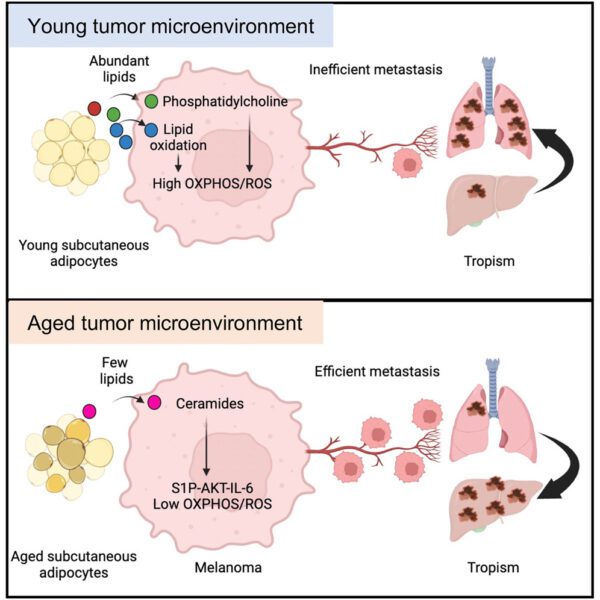
Tissue-specific fibroblast lipid cues impose the rate of epithelial cancer invasion
27 April 2026
Institute Authors (4)
Amaya Virós, Noah Palombo, Charlotte Russell, Claus Jørgensen
Research Group
Skin Cancer & Ageing
27 April 2026
https://www.cell.com/cancer-cell/fulltext/S1535-6108(26)00114-5
Immunometabolic gatekeeping: How tissue metabolism conditions tumor immunity
13 April 2026
Institute Authors (1)
Samra Turajlić
Research Group
Cancer Dynamics
13 April 2026