Paper information and key findings
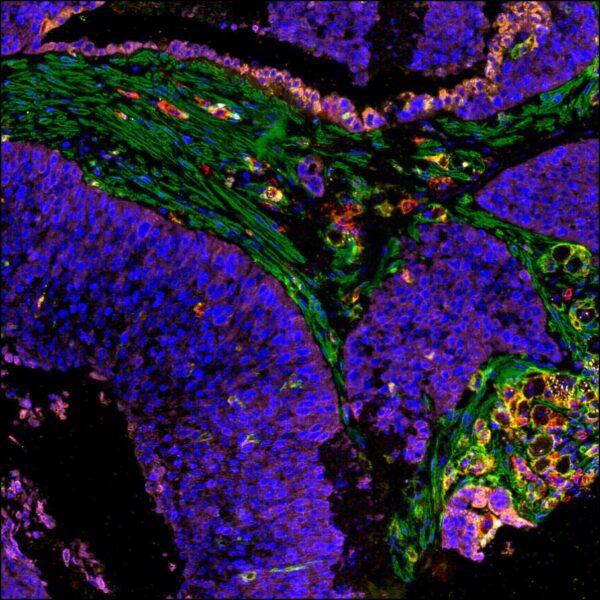
Bacteria have increasingly been found to contribute to immune remodeling and disease progression across different solid tumor types. This study investigated whether intratumoral bacteria play a similar role in kidney cancer, where these same immune changes characterize aggressive disease and treatment resistance. Analyzing two large and geographically distinct patient cohorts, the researchers found that live bacteria accumulated in discrete niches within tumors and that higher bacterial abundance predicted worse patient survival. Bacterial hotspots were consistently characterized by the same neutrophil-driven immune profiles that mark aggressive disease, a pattern further confirmed in cell culture experiments showing that live bacteria directly sustained the production of immune-signaling molecules that attract neutrophils. These findings corroborate patterns observed in other solid tumors and establish intratumoral bacteria as a previously overlooked component of the kidney cancer immune landscape, laying the groundwork for exploring them as potential novel therapeutic targets.
Bacteria have increasingly been found to contribute to immune remodeling and disease progression across different solid tumor types. This study investigated whether intratumoral bacteria play a similar role in kidney cancer, where these same immune changes characterize aggressive disease and treatment resistance. Analyzing two large and geographically distinct patient cohorts, the researchers found that live bacteria accumulated in discrete niches within tumors and that higher bacterial abundance predicted worse patient survival. Bacterial hotspots were consistently characterized by the same neutrophil-driven immune profiles that mark aggressive disease, a pattern further confirmed in cell culture experiments showing that live bacteria directly sustained the production of immune-signaling molecules that attract neutrophils. These findings corroborate patterns observed in other solid tumors and establish intratumoral bacteria as a previously overlooked component of the kidney cancer immune landscape, laying the groundwork for exploring them as potential novel therapeutic targets.
Institute Authors
Groups
Group leader
Research topics & keywords
https://www.sciencedirect.com/science/article/pii/S2666634026003387?via%3Dihub
Bacteria inside kidney tumors associate with myeloid inflammation and disease progression: A TRACERx Renal study
23 October 2026
Institute Authors (1)
Samra Turajlić
Research Group
Cancer Dynamics
23 October 2026
https://royalsocietypublishing.org/rsob/article/16/8/260089/482862/CDK1-Cyclin-B-mediated-phosphorylation-of-PP2A-B56
CDK1-Cyclin B mediated phosphorylation of PP2A-B56 on B56Par1.T73T75 controls mitotic entry timing and Schizosaccharomyces pombe cell size
19 August 2026
Institute Authors (3)
Lenka Halova, Duncan Smith, Iain Hagan
Labs & Facilities
Biological Mass Spectrometry
Research Group
Cell Division
19 August 2026
https://www.cell.com/immunity/fulltext/S1074-7613(26)00278-5
CCR7+ activated dendritic cells are essential for spontaneous and immunotherapy-driven anti-tumor immunity
4 August 2026
Institute Authors (10)
Erin Richardson, Shih-Chieh Chiang, Massimo Russo, Charles Earnshaw, Anna Pidoux, Poppy Dunn, Sudhakar Sahoo, Antonia Banyard, Natalia Moncaut, Santiago Zelenay
Labs & Facilities
BRU Experimental Team, Computational Biology Support, Genome Editing and Mouse Models, Mass and Flow Cytometry, Transgenic Breeding Team
Research Group
Cancer Inflammation and Immunity
4 August 2026
https://www.cell.com/cell/fulltext/S0092-8674(26)00522-2
Plasma signals of lung tumor promotion for molecular cancer prevention
25 June 2026
Institute Authors (1)
William Hill
Research Group
Cancer Origins
25 June 2026
https://link.springer.com/article/10.1038/s44319-026-00809-1
PKMYT1 has an important role in the timing and fidelity of chromosome segregation
5 June 2026
Institute Authors (6)
Asma Belbelazi, Charlie Greenaway-Wells, Zoe Edwards, Wendy Trotter, Keren Dawson, Iain Hagan
Research Group
Cell Division
5 June 2026
https://www.nature.com/articles/s42255-026-01514-y
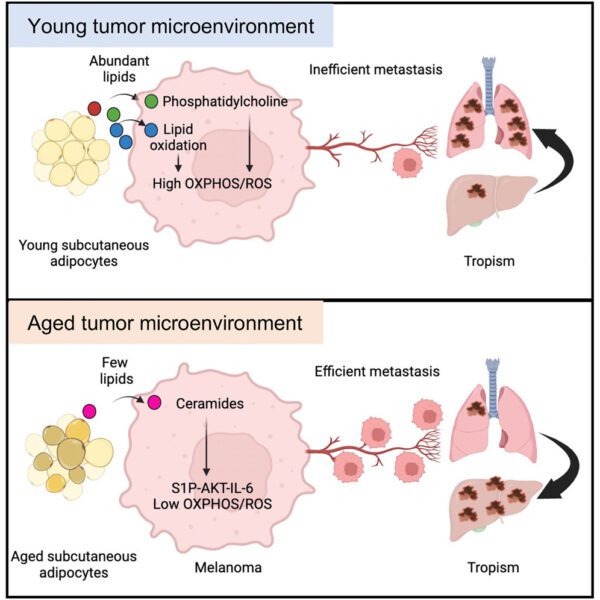
Tissue-specific fibroblast lipid cues impose the rate of epithelial cancer invasion
27 April 2026
Institute Authors (4)
Amaya Virós, Noah Palombo, Charlotte Russell, Claus Jørgensen
Research Group
Skin Cancer & Ageing
27 April 2026