Paper information and key findings
In situ cryo-electron microscopy (cryo-EM) enables the direct interrogation of structure-function relationships by resolving macromolecular structures in their native cellular environment. Recent progress in sample preparation, imaging and data processing has enabled the identification and determination of large biomolecular complexes. However, the majority of proteins are of a size that still eludes identification in cellular cryo-EM data, and most proteins exist in low copy numbers. Therefore, novel tools are needed for cryo-EM to identify macromolecules across multiple size scales (from microns to nanometers). Here we introduce nanogold probes for detecting specific proteins using correlative light and electron microscopy, cryo-electron tomography (cryo-ET) and resin-embedded electron microscopy. These nanogold probes can be introduced into live cells, in a manner that preserves intact molecular networks and cell viability. We use this ExoSloNano system to identify both cytoplasmic and nuclear proteins by room-temperature electron microscopy, and resolve associated structures by cryo-ET. By providing high-efficiency protein labeling in live cells and molecular specificity within cryo-ET tomograms, ExoSloNano expands the proteome available to electron microscopy.
In situ cryo-electron microscopy (cryo-EM) enables the direct interrogation of structure-function relationships by resolving macromolecular structures in their native cellular environment. Recent progress in sample preparation, imaging and data processing has enabled the identification and determination of large biomolecular complexes. However, the majority of proteins are of a size that still eludes identification in cellular cryo-EM data, and most proteins exist in low copy numbers. Therefore, novel tools are needed for cryo-EM to identify macromolecules across multiple size scales (from microns to nanometers). Here we introduce nanogold probes for detecting specific proteins using correlative light and electron microscopy, cryo-electron tomography (cryo-ET) and resin-embedded electron microscopy. These nanogold probes can be introduced into live cells, in a manner that preserves intact molecular networks and cell viability. We use this ExoSloNano system to identify both cytoplasmic and nuclear proteins by room-temperature electron microscopy, and resolve associated structures by cryo-ET. By providing high-efficiency protein labeling in live cells and molecular specificity within cryo-ET tomograms, ExoSloNano expands the proteome available to electron microscopy.
https://royalsocietypublishing.org/rsob/article/16/8/260089/482862/CDK1-Cyclin-B-mediated-phosphorylation-of-PP2A-B56
CDK1-Cyclin B mediated phosphorylation of PP2A-B56 on B56Par1.T73T75 controls mitotic entry timing and Schizosaccharomyces pombe cell size
19 August 2026
Institute Authors (3)
Lenka Halova, Duncan Smith, Iain Hagan
Labs & Facilities
Biological Mass Spectrometry
Research Group
Cell Division
19 August 2026
https://www.cell.com/immunity/fulltext/S1074-7613(26)00278-5
CCR7+ activated dendritic cells are essential for spontaneous and immunotherapy-driven anti-tumor immunity
4 August 2026
Institute Authors (10)
Erin Richardson, Shih-Chieh Chiang, Massimo Russo, Charles Earnshaw, Anna Pidoux, Poppy Dunn, Sudhakar Sahoo, Antonia Banyard, Natalia Moncaut, Santiago Zelenay
Labs & Facilities
BRU Experimental Team, Computational Biology Support, Genome Editing and Mouse Models, Mass and Flow Cytometry, Transgenic Breeding Team
Research Group
Cancer Inflammation and Immunity
4 August 2026
https://www.cell.com/cell/fulltext/S0092-8674(26)00522-2
Plasma signals of lung tumor promotion for molecular cancer prevention
25 June 2026
Institute Authors (1)
William Hill
Research Group
Cancer Origins
25 June 2026
https://link.springer.com/article/10.1038/s44319-026-00809-1
PKMYT1 has an important role in the timing and fidelity of chromosome segregation
5 June 2026
Institute Authors (6)
Asma Belbelazi, Charlie Greenaway-Wells, Zoe Edwards, Wendy Trotter, Keren Dawson, Iain Hagan
Research Group
Cell Division
5 June 2026
https://www.nature.com/articles/s42255-026-01514-y
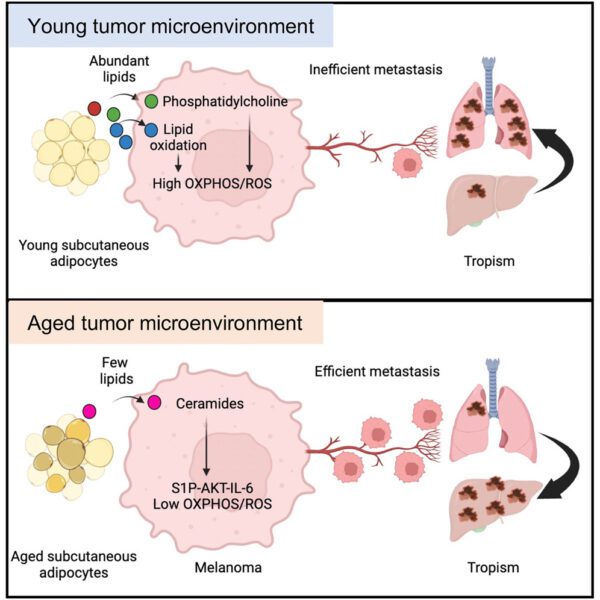
Tissue-specific fibroblast lipid cues impose the rate of epithelial cancer invasion
27 April 2026
Institute Authors (4)
Amaya Virós, Noah Palombo, Charlotte Russell, Claus Jørgensen
Research Group
Skin Cancer & Ageing
27 April 2026
https://www.cell.com/cancer-cell/fulltext/S1535-6108(26)00114-5
Immunometabolic gatekeeping: How tissue metabolism conditions tumor immunity
13 April 2026
Institute Authors (1)
Samra Turajlić
Research Group
Cancer Dynamics
13 April 2026